


A few weeks ago, I got either an email message or phone call from attorney David Bornn from St. Thomas who wanted to visit Maroon Country on St. Croix. In 2024, I had a Zoom meeting with the newly established territorial park board members to discuss the land acquisition of the Great Northwest and Northeast Central of St. Croix. I am not sure if David was at the meeting. Anyhow, it came to me that he was there. Nevertheless, I explained to the board members the botanical and human history of the forest, the culture, and the overall history of the Great Northwest and Northeast Central known as Maroon Country.
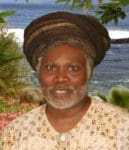
I mentioned to them the slave gravesites and other archeological sites and historic structures that covered the landscape of this sacred land. In 1983, the government of the Virgin Islands protected land in St. Croix’s Northside A Quarter under a “perpetual scenic and preservation easement.” The signing of Act 4881 established an area of not less than 1,000 acres where scenic and other features would be preserved indefinitely.
This Act was established when 4,000 plus acres of the northwest and northeast central of St. Croix was about to be rezoned from agriculture to other uses such as building hotels, condos, shopping centers and the like, which would impact the natural, cultural, historical, and marine resources of the last intact wilderness area of the northwest of the island. Believe me, these sacred lands were the stronghold of Maroons (runaway slaves) where the rugged hills and mountain forests protected them and were used as a refuge for freedom.
I remember being asked by the territorial park board what parcel of land should be preserved, Northwest A Quarter or Northeast B Quarter. I said the northwest, although the two parcels of land should not be separated for their historic spiritual values to the people of the Virgin Islands. However, God helped me out. It was attorney Bornn, when he was negotiating with the landowner, who mentioned the slaves’ gravesites in (Estate Hermitage) the northeast central part of Maroon Country that the entire 2,000 plus acres of land (Northwest and Northeast Central) should go to the people of these islands.
In his text to me, Bornn said, “I am truly excited to see what it was that I was arguing for with the owner that he had an obligation to give to GVI.” The rest is history. We purchased over 2,000 acres of historic land, which created the first and only Maroon Sanctuary Park in the Caribbean region and in the world. What a great accomplishment for the people of these islands.
As David got close to the date he would be arriving to St. Croix, he emailed me. “We (4 of us) are looking forward to our tour of Maroon Ridge with you next Tuesday, April 28th. As agreed, we will arrive on Fly The Whale at about 7:30 am and you will meet us at airport for journey out to the much-anticipated hiking and viewing site. I know this is one of the ‘loves of your life.”
As I picked up David and his three associates from the airport, the journey to Maroon Country began They were in for a hike to explore part of Maroon Country on foot and part by driving. That Tuesday morning it was overcast, with dark grayish clouds in the sky looking to rain. Rain or no rain, I was taking them to Maroon Country. As we drove on Canaan Ridge Scenic Road East heading up the mountain, it was rough. I said to them, “welcome to Maroon Country.”
It is a dirt road that takes you between Blue Mountain and Mount Eagle, the two highest peaks on St. Croix. Those guys were all dress up with their backpacks ready to hike and explore. We started off on an old slave dirt road to Mount Eagle. As David stepped on the road to Mount Eagle trail with his associates, they were making history. I wanted to go into the history of the area, but they didn’t have enough time, as they were flying back to St. Thomas for 5 p.m. Believe me, to enjoy this historic park, it takes more than a day if you are hiking on foot and enjoying the great mountain view, historic sites, tide pools, and telling the history of the Maroons.
I reassured David that we are hiking on the saddle of the mountain and not on steep slopes of the park. I continued to give them a brief history of the site and how the dense forests of the area, from the beginning of the colonization of St. Croix until emancipation of 1848, was a refuge for runaway slaves. As we climbed higher on the ridge, it got cooler where there were stunning panoramic views of the park.
It was a breathtaking view where it felt like you were seeing St. Croix from heaven looking down on the island. The guys took out their cell phones and began to take lots of pictures. You can’t help yourself but to take in the view and take pictures. I pointed out to them several endangered species and rare species of plants like ferns and the endangered species Spice guava (Myrcianthes fragrans).
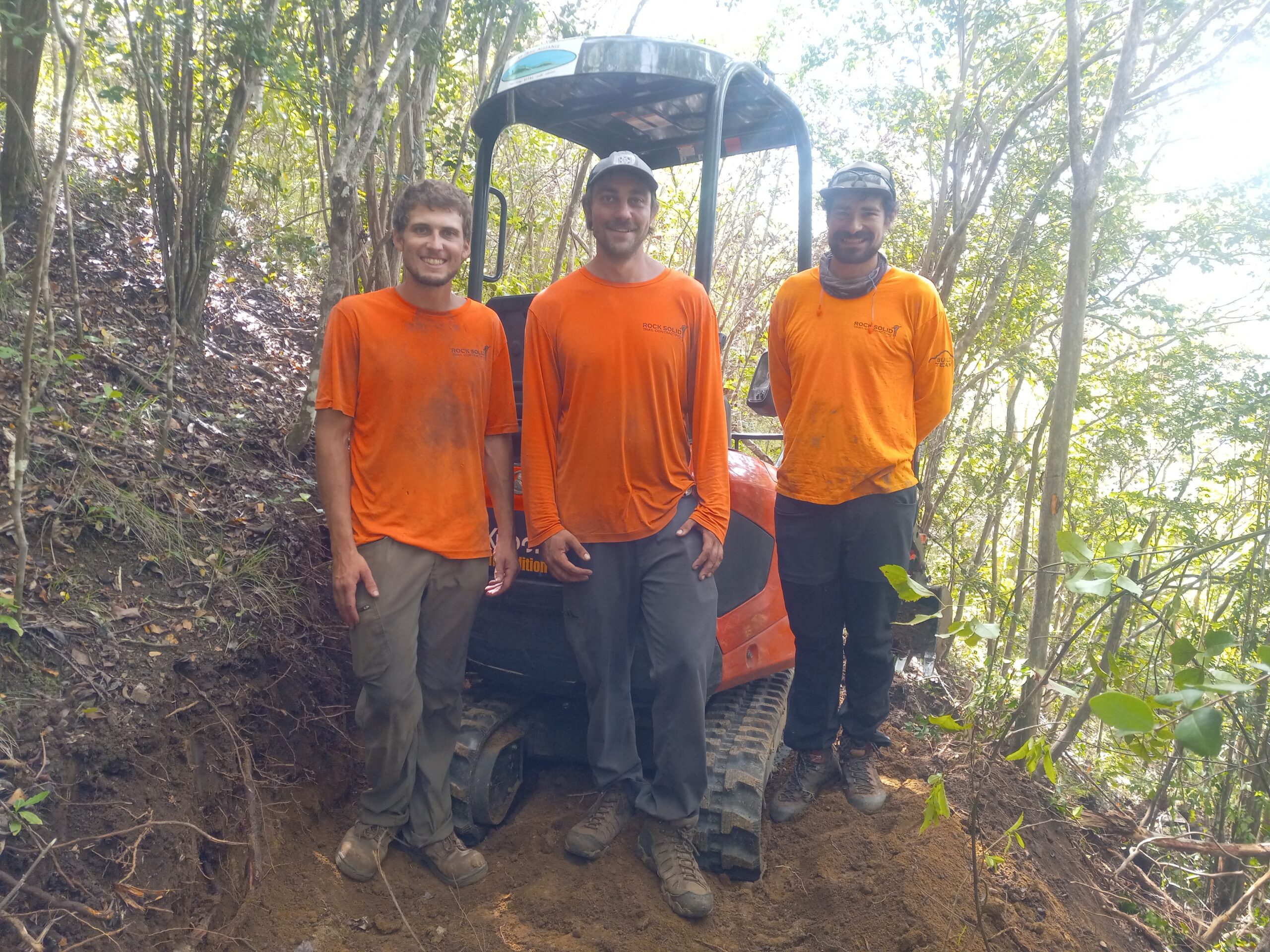
As we continued to hike, we came across a group of young men building trails along Mount Eagle Mountain. As a member of the Virgin Islands Trail Alliance board, we contacted a stateside company called Rock Solid Trail Contracting, which has a contract with us to establish mountain bike and hiking trails in certain parts of the park. This trail project is in conjunction with the Virgin Islands Territorial Parks and Protected Areas, a division of the Department of Parks and Natural Resources and managed by the Director Kitty Edwards.
I asked the workers of the trail company to give a briefing to David and his associates of what they are doing building the trails. Since the trail company has been here since February, I visit them two or three times a week by hiking up the mountain to make sure that the job is done correctly. It is the people’s park. I took it upon myself that no historic sites, endangered species of trees, or rare animals are impacted by the construction of the trails.
David kept on asking me to see Bodkin Mill, a mill almost 1,000 feet above sea level. We drove to the northwest of Maroon Country. David and his associates were so overwhelmed with the natural beauty of the park with its intact forest and ocean views of the Caribbean Sea. We hiked up the hill to the mill. David was so excited, like a little kid getting candy. He loved the park. He kept on telling me, “Olasee the park is big.” He saw the park on paper with the negotiation with the landowner, but not realizing how beautiful and big the park truly is — until his visit.
There is a lot more of the park David has not seen. Looking at their faces, I felt for them, so we went to Off the Wall restaurant at Cane Bay to get something to eat. I am telling the Virgin Islands public that Attorney David Bornn was a godsend to help protect Maroon Country by using his legal skills.
— Olasee Davis is a bush professor who lectures and writes about the culture, history, ecology and environment of the Virgin Islands when he is not leading hiking tours of the wild places and spaces of St. Croix and beyond.
Editor’s Note: Opinion articles do not represent the views of the Virgin Islands Source newsroom and are the sole expressed opinion of the writer. Submissions can be made to visource@gmail.com.