

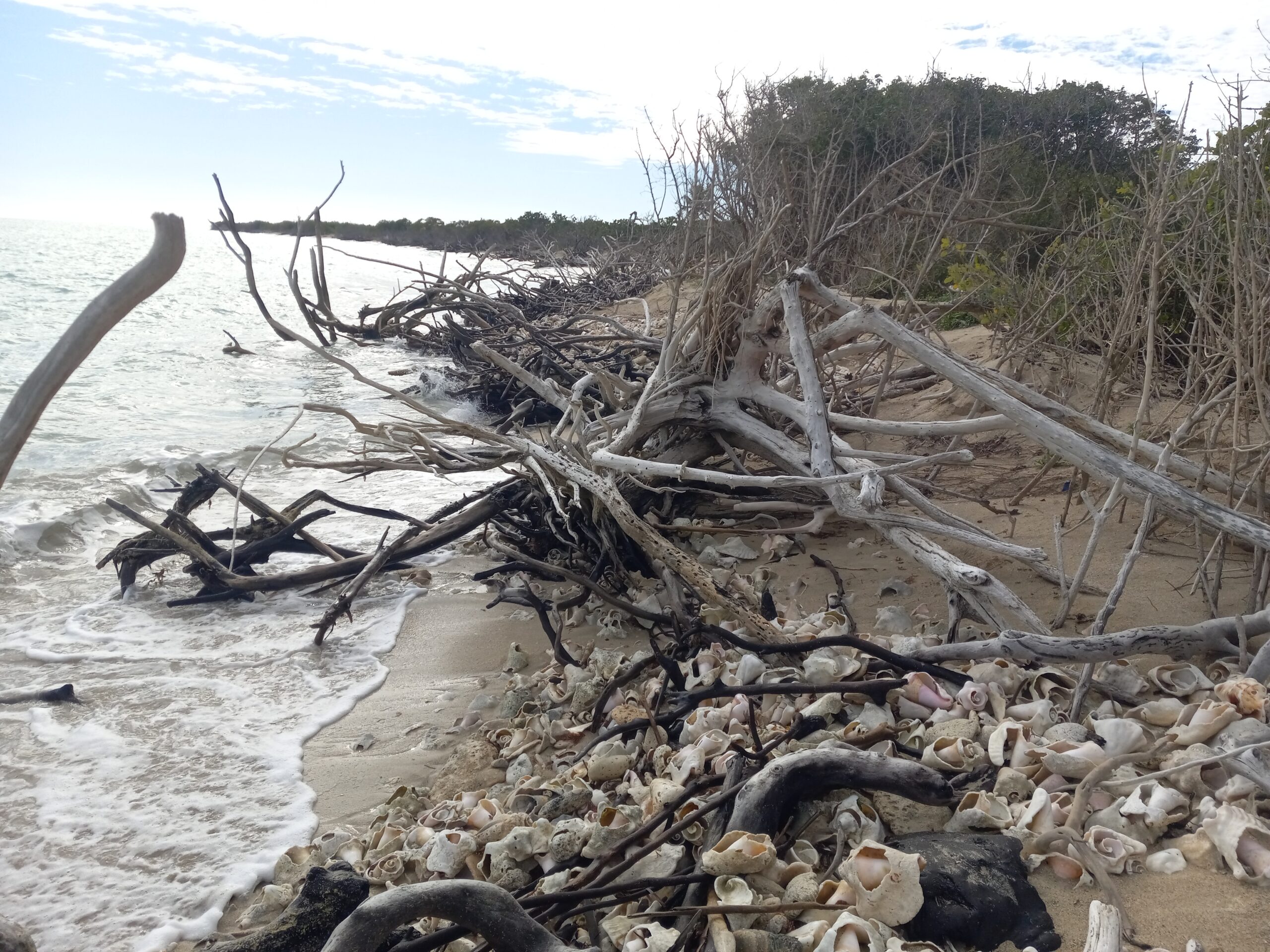
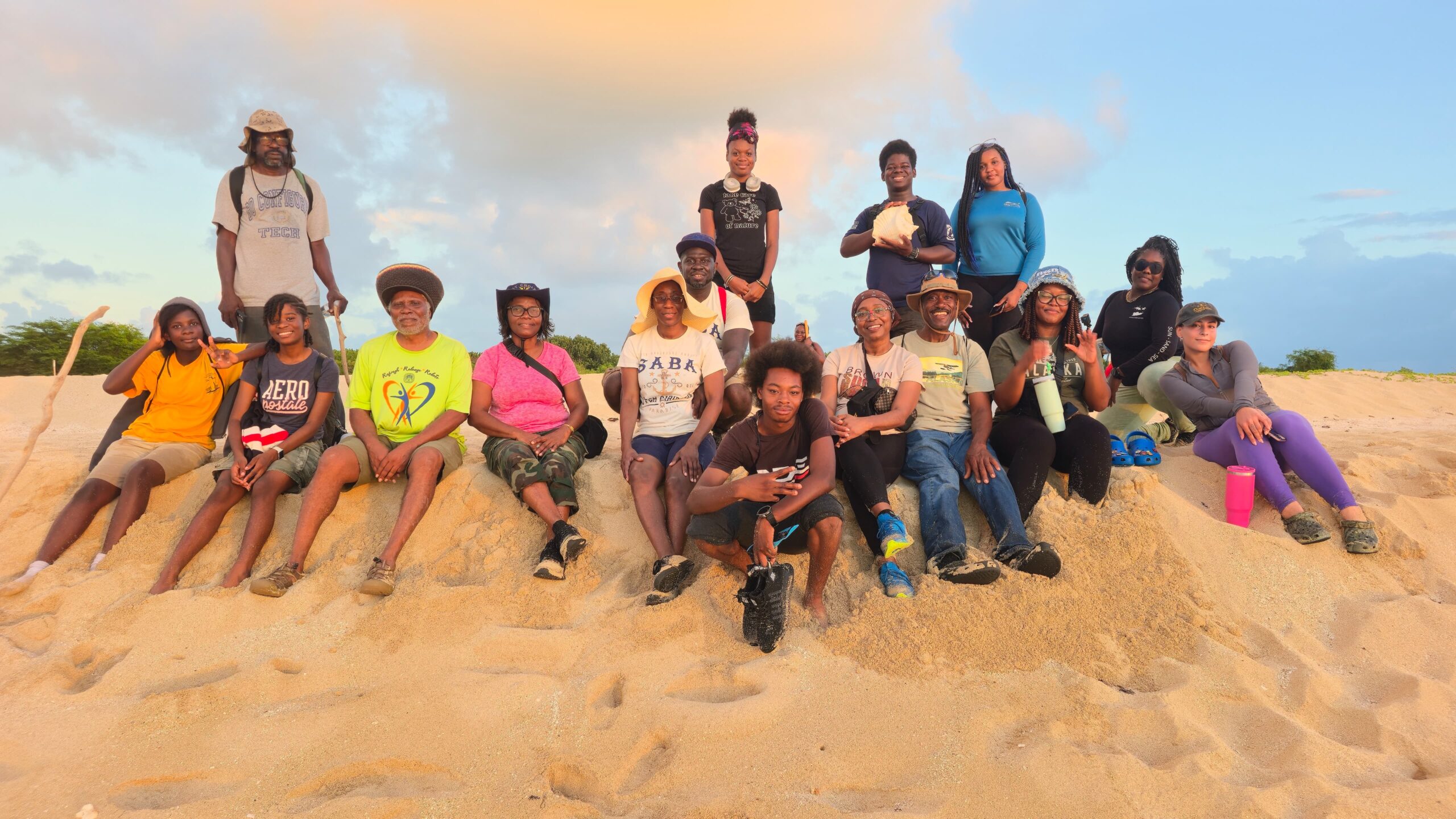
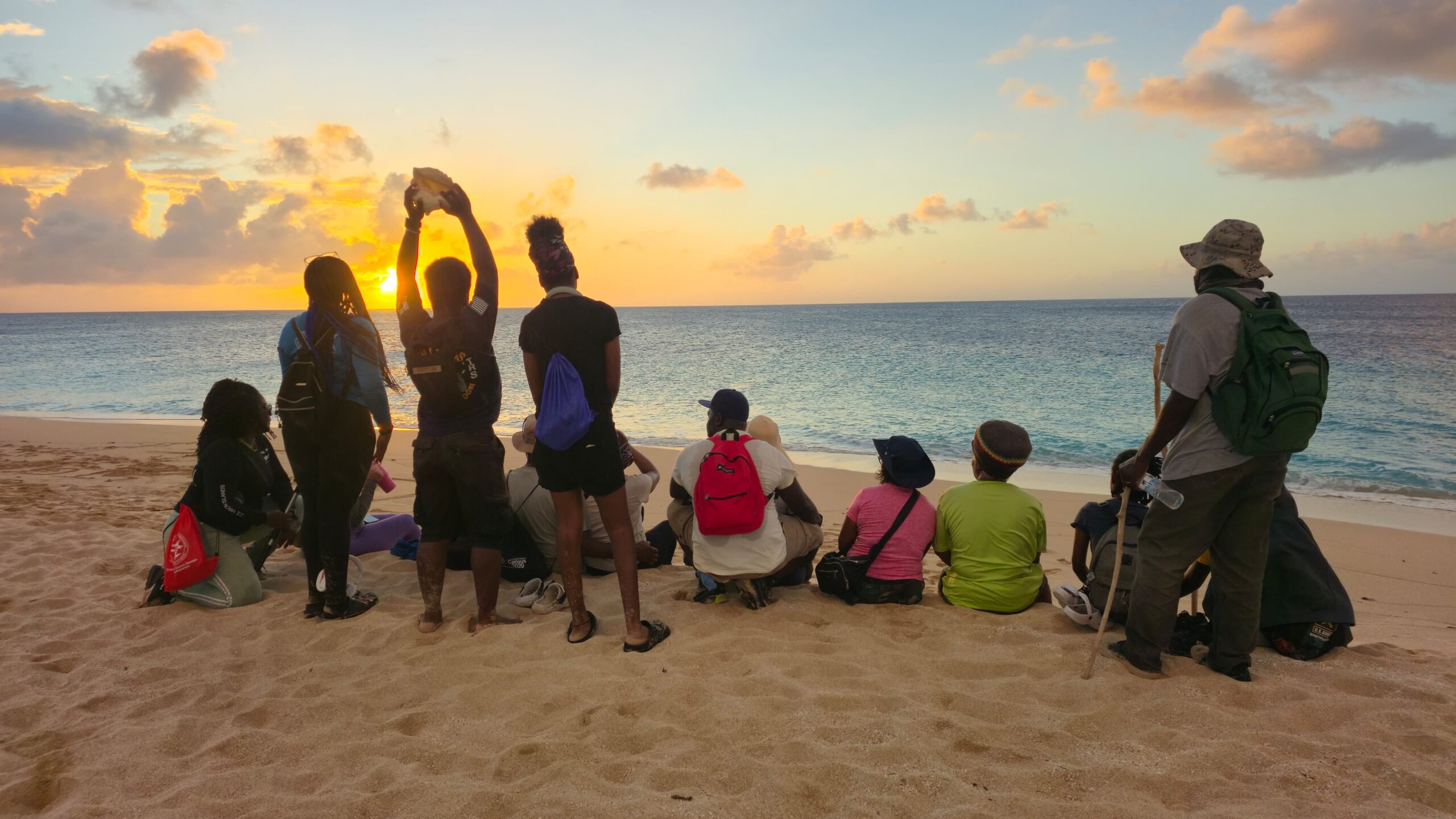
The other day, I conducted a hike for a small group of Seventh-day Adventist church folks to Sandy Point National Wildlife Refuge, the largest refuge in the Virgin Islands. On this hike, I focused on the environmental impact on the area before it became a refuge and the changes in the coastline where beaches are disappearing rapidly, particularly on the southwestern shores of the refuge, for decades. The church hikers also learned how nature is recreating a new coastal ecosystem along the west and south shore of Sandy Point refuge.
The impact on Sandy Point starts a half century ago due to the dredging of the Krause Lagoon to create the industrial complex on the south shore of St. Croix. This assault on the environment took place in the early 1960s. Some of the most beautiful beaches on St. Croix were on the south shore of the island. Today, miles of shoreline from the west of the industrial zone and southeastern shore are gone forever. There are no swimmable beaches anymore, either from the west or east of the industrial complex.
Manchineel Bay is the only beach where residents swim, and is referred to as Halfpenny Bay on the southeastern shore of St. Croix. Its ecosystems have been compromised by the dredging that took place since the 1960s. The beach environment is constantly changing with erosion, vegetation removal, and large wave action against the shore. The late native naturalist George A. Seaman described what happened to the beaches on the south shore of St. Croix. “From Lime Tree Bay to Sandy Point once sparkling, translucent water now resembled watered down milk. Colloidal clays in suspension destroyed reefs and fish and made bathing repulsive,” noted Seaman.
He further wrote, “The entire estuarine faunal life wreathed in the throes of expiration, if not already dead. Here and there a few gray ghosts of once luxuriant mangrove cropped out of poisonous-looking mud. An entire living, breathing, self-perpetuating, interrelated cosmography now lay under roads, buildings, tanks, piers, pipes, and stacks belching offensive and deleterious effluvium into the summer sky.”
This was the description by Seaman, a wildlife biologist, of the oil refinery and the Virgin Islands Alumina Corporation’s (VILCO) destruction of the largest mangrove lagoon in the Virgin Islands. In this Everglade of a wilderness, countless wildlife species bred and reproduced in the millions of living organisms that our fishing industry and livelihood of Virgin Islanders once depended on to feed their families.
Other sources of pollution were sewage outfall from the St. Croix Municipal Sewage Treatment Plant as well as rum industries that discharged treated stormwater and oily wastewater through several streams (guts) and drainage channels to the ocean. All this had a major impact on the coastal environment on the south shore of St. Croix
In the late 1970s until 1982, Sandy Point peninsula was assaulted again. This time it was the West Indies Investment Mining Company. This company mined beach sand within 100 to 150 feet of the shoreline. The industrial activity at Sandy Point caused significant and everlasting environmental damage to a fragile habitat for endangered species such as sea turtles, other wildlife such as birds, as well as rare, threatened, and endangered plants and a pre-historic site near the shoreline of the refuge.
The removal of very large volumes of sand from Sandy Point damaged the natural shoreline. The activity destabilized beaches and caused erosion and the removal of native vegetation. Thus, the biodiversity of the Sandy Point ecosystem was disrupted by the industrial impact on the coastal environment by removing food sources, such as clams and other microorganisms for birds and other wildlife, and damaging the habitat that is required for marine life.
The mining of sand at Sandy Point also lowered the beach profile by leaving areas more vulnerable to coastal storms, beach erosion, and sea level rising. There was also a plan to build a large hotel, which would further destroy the fragile environment. Believe me, the destruction of the Sandy Point environment was so severe that it triggered a major campaign in the late 1970s — led by another native Virgin Islander, the late Otto Tranberg, an environmental activist — to protect the area. In 1982, sand mining at Sandy Point was halted, which eventually led to the protection of the area.
Later in 1982, Sandy Point was designated as a national wildlife refuge by the federal government. In 1984, the land was sold to the U.S. Fish and Wildlife Service (federal government) to establish Sandy Point National Wildlife Refuge. The refuge was created specifically to protect the largest nesting population of endangered leatherback sea turtles under U.S. jurisdiction. Sandy Point National Wildlife Refuge spans over 380 acres, and has the longest, most pristine beach in the Virgin Islands.
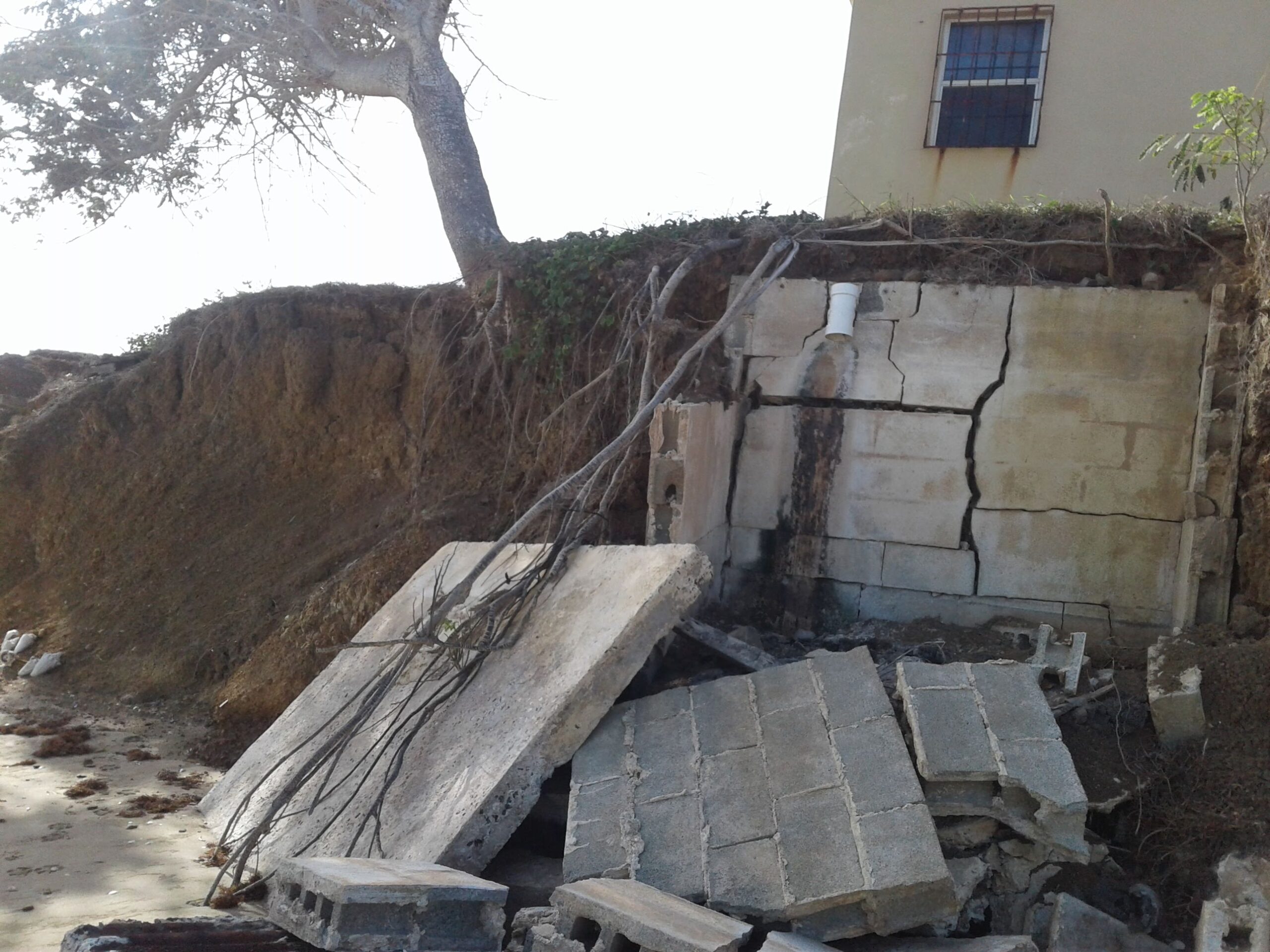
With climate change, but more importantly with the impact of humans for decades on the coastal south shores of Sandy Point refuge, miles of beach have fallen into the ocean. Trees and other vegetation have washed away. It is sad, very sad. The damage from the 1960s and 1970s now results in the destruction of the human species on Sandy Point’s coastal environment. Eggs of sea turtles on the south shore of the refuge are being washed away and laying sand is gone. Tons and tons of beachfront properties are lost forever.
The coastal erosion is happening along the southern shore of St. Croix where houses are threatened to fall into the ocean. In fact, a house is hanging over the cliff of the shoreline in the Ruan Bay area where its septic tank has been washed into the ocean. No one swims on the south shore of St. Croix. Residents are restricted to a few beaches for recreation.
However, there is hope. Nature is creating new mangrove forests on the south shore of Sandy Point. They are coming about due to the large volume of sand taking, which creates a depression or large hole in the sand made by the mining industrial activities more than 56 years ago. This process of colonization of mangrove seedlings can take years or hundreds of years to develop. However, Sandy Point will never be the same as when the geological formation of the island developed about 80 million years ago, according to geologists. Sandy Point should be named Otto Tranberg National Wildlife Refuge. It is because of Tranberg and others that Sandy Point exists today.
— Olasee Davis is a bush professor who lectures and writes about the culture, history, ecology and environment of the Virgin Islands when he is not leading hiking tours of the wild places and spaces of St. Croix and beyond.
Editor’s Note: Opinion articles do not represent the views of the Virgin Islands Source newsroom and are the sole expressed opinion of the writer. Submissions can be made to visource@gmail.com.