

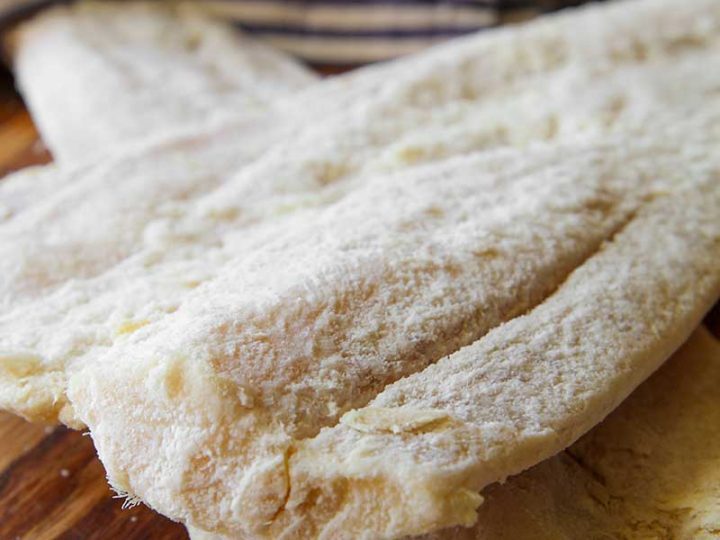
My colleague Saudi Jones asked me if I have any historical information on the use of saltfish in the Virgin Islands. I must say this, she got me thinking. I grew up eating saltfish. However, I never really thought about the history of saltfish until she inquired of the history to me. She wanted to know if there were any historical documents, records, etc., or just something that connects saltfish to Virgin Islands culture for her exhibit at the 2026 AgriFest.

The origins of saltfish can be traced to ancient civilizations, such as the Greeks and Romans, where they recognized the value of preserving fish to ensure a stable supply. Saltfish, a staple in the North Atlantic region, has been produced for over 500 years in Iceland, Newfoundland, and in other European countries. Thus, saltfish was a major export of the North Atlantic region and can be found in many of the ingredients in the Atlantic, but it also spread and became a tradition in West African, Mediterranean, Caribbean, and Brazilian cuisines. The bottom line was that saltfish was a staple food in Europe.

It was also a vital link in the international commerce between the so-called New and Old World. Nonetheless, the history of saltfish in the Danish West Indies is linked to the 17th century colonial plantation economy, the transatlantic slave trade, and how saltfish preserved well in a tropical climate for the enslaved population of the Caribbean region. In 1792, when the French Revolution took a radical turn, Charles Boudens, vicomte de Vanderbourg, from a noble family in France, was forced to flee his country. He fled to Germany and then to Denmark and later ended up in the Danish West Indies where he became a supervisor for Heinrich Carl von Schimmelmann, a prominent German-born Danish merchant, banker, politician, and slave trader who owned four large plantations on St. Croix.
In his note of the state of the enslaved Africans on Schimmelmann plantation, he mentioned saltfish, also called cod fish, as part of the food enslaved laborers consumed. “The neighboring Negroes of the towns purchase bread, butter, meats, and salted fish there, all of which are foreign provisions,” noted Venderbourg. In the late 1820s, Lt. Brady, a British navy officer, visited St. Croix. His brother was the manager of Mannings Bay on the south shore of St. Croix, a plantation where the Randall “Doc” James Racetrack is located today.
Brady had the opportunity to view the conditions of slavery in Mannings Bay and several other Crucian sugar plantations. In his findings, he published a book titled Observations on the State of Negro Slavery in the Island of St. Croix. In his book, he mentioned, “The legal weekly allowance of provisions there, and in the neighboring island of St. John, for each full-grown negro is six quarts of Indian corn-meal, or twenty-four pounds of yams, or other edible roots, and six herrings, or a proportion of other salted fish …”
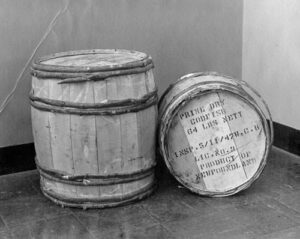
In the transatlantic slave trade, saltfish was a key commodity in the triangular trade of kidnapping Africans from Africa. Often saltfish was imported from Newfoundland or Europe alongside the transported supplies of sugars from the West Indies. King Frederik V (1746-1766) of Denmark was not known primarily for his dietary regulations. However, his administration in the Danish West Indies introduced dietary regulations affecting the treatment of the enslaved population in the mid-18th century.
This was primarily due to the 1733 slave insurrection, which highlighted how severe malnourishment and abuse was for the enslaved population in the Danish West Indies. The rights of medical care, family integrity, and other issues facing the enslaved population must be addressed, King Frederik V stated. Part of the dietary regulations was to allow each enslaved individual 10 years or older a weekly ration of three pounds of saltfish, beef, pork, etc.
The intention of this regulation was to standardize treatment for the enslaved population in the Danish West Indies and it was to be carried out by the colonial government. However, planters argued that such regulations were more disadvantageous than advantageous to their plantation operations. In other words, planters believed this new rule would cut into their operations expanding. The Danish West Indies was not the only market to import saltfish from Europe.
Brazil, which is known as “small Africa” due to the largest population of imported enslaved Africans in the Americas, had a major imported saltfish market from Europe, particularly from Newfoundland. In 1808, saltfish was first imported to Brazil when the country was still a Portuguese colony. Saltfish was also imported to the French and Spanish West Indies and to Dutch Caribbean island colonies.
The British West Indies, which included Barbados, Jamaica, British Guiana, Grenda, Trinidad, Dominica, St. Lucia, St Vincent, Tortola, and others, were also part of the saltfish market from Europe. In return, these islands’ products were sugar cane, including molasses and rum, at least until the abolition of slavery in 1833, because their economy depended upon enslaved Africans. Plantation owners in these regions needed a cheap source of protein for their slaves and later “free slaves,” and Newfoundland provided saltfish for that market
Fish and Fungi is now the Virgin Islands National dish. However, due to rations of saltfish and cornmeal by our ancestors, enslaved African women developed “fish and fungi or fungie.” Thus, saltfish has become one of the cornerstones of Virgin Islands native dishes. This product appears in stews, saltfish cakes, saltfish Gundy, fish pudding, fish loaf, saltfish pates, and the list goes on. Back in the day, eating saltfish on Good Friday was a tradition extending from slavery in the Danish West Indies.
According to the Bible, Jesus ate fish after his resurrection to prove to his disciples that he was physically alive and not a spirit. This scripture ties into a Virgin Islands traditional dish where saltfish, ground provisions like boiled sweet potatoes, yams, dumplings, green banana, boiled ripe plantains, and a boiled egg on the side was eaten on Good Friday. Traditionally, maubi was drunk on Good Friday as part of the lunch after the church service, although it can be drunk any time of the year. How can I forget Docouna, which was part of our Easter tradition in the Virgin Islands and throughout the Caribbean region?
After the 1848 emancipation of the enslaved population of the Danish West Indies, saltfish remained a staple diet for our ancestors due to its accessibility and affordability. In addition to the preservation of saltfish, local rock salt from our salt ponds provided salt for corning fresh local caught fish. As a result, saltfish became a tradition, bringing Africans, Europeans, and Caribbean folks together, connecting us with food, slavery, and freedom.
— Olasee Davis is a bush professor who lectures and writes about the culture, history, ecology and environment of the Virgin Islands when he is not leading hiking tours of the wild places and spaces of St. Croix and beyond.
Editor’s Note: Opinion articles do not represent the views of the Virgin Islands Source newsroom and are the sole expressed opinion of the writer. Submissions can be made to visource@gmail.com.