

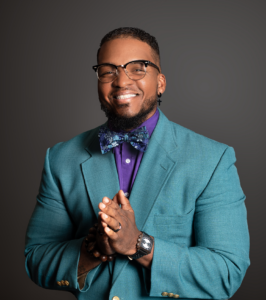
 In his biweekly column, Langley Shazor speaks to issues important to men within the territory.
I have started reading “Emotional Intelligence 2.0” lately. Not because I have hit some crisis or because something fell apart in my life, but because I understand something about growth. It does not stop unless you choose to stop it. Too many people wait until they hit a wall before they start thinking about self-improvement. I do not want to wait for the wall. I want to keep building, refining, and stretching.
We talk about accountability all the time. It comes up in leadership meetings, in relationship conversations, in community discussions. But when we speak about accountability, we often keep the spotlight on other people. We look out the window and examine what they should be doing, how they should be living, and where they need to improve. We speak with confidence about how they missed the mark, but we do not speak with the same boldness when it comes to looking at ourselves.
One of the foundational pillars of emotional intelligence is self-awareness. That is the ability to recognize your emotions, your triggers, your habits, and your blind spots in real time. And let me tell you, that skill is not something you master once and put on the shelf. It takes intention, attention, and practice.
I made a post the other day about the importance of getting out of the window and into the mirror. That was not just a catchy line. That was the product of some honest reflection. The window represents the place where we spend too much time looking outward, measuring, comparing, and critiquing others. The mirror represents the place where the work really happens. The mirror forces you to confront the unfiltered truth about who you are and how you show up.
The window is easy. It allows you to stay busy pointing fingers. It gives you the illusion of control and superiority. You can talk about someone else’s choices all day without ever touching the discomfort of your own truth. But the mirror? The mirror is confrontational. It will not flatter you. It will not smooth over your contradictions. The mirror will show you where you are living out of alignment with your own values.
The mirror asks hard questions:
- Why do you keep calling recklessness “living in the moment?”
- Why are you still blaming others for boundaries you refuse to set?
- Why do you expect patience from others but give none when it is your turn?
Self-awareness is not about shaming yourself. It is about clarity. It is about understanding that you cannot fix what you refuse to face. It is also about realizing that some of the patterns you are stuck in are not about other people at all. They are about your decisions, your mindsets, and your unwillingness to change them.
I started reading “Emotional Intelligence 2.0” not because I was broken, but because I know I can be better. The book reinforced something I already knew but needed to revisit: your EQ is not fixed. You can increase it. You can sharpen your ability to read yourself and others. You can improve your communication and your relationships. You can learn to navigate difficult situations with more grace and less emotional reactivity.
When you truly begin to understand yourself, you begin to understand how your actions ripple out into your relationships, your work, and your community. You realize that accountability is not just about admitting when you are wrong. It is about developing the awareness to recognize when you are headed in the wrong direction before you arrive there. It is about catching yourself in the moment instead of cleaning up after yourself later.
The danger of staying in the window is that you start mistaking your ability to see other people’s faults for wisdom. That is not wisdom. That is distraction. It takes no skill to criticize. It takes skill to correct yourself before someone else has to.
I have seen it in leadership, in friendships, and in family dynamics. The people who grow the most are not the ones who have the fewest mistakes. They are the ones who are quick to look in the mirror, own what they see, and do something about it. They do not run from the reflection. They face it head on because they understand that ignoring it will not make it disappear.
Self-awareness and accountability work together. One without the other leaves you incomplete. If you are self-aware but not accountable, you are simply a person who knows better but refuses to do better. If you are accountable without self-awareness, you will spend your life apologizing without understanding why you keep repeating the same behavior. But when you have both, you position yourself to grow in ways that are sustainable.
That is why I challenge myself to keep the mirror close. Reading this book has reminded me that emotional intelligence is a lifelong project. The version of me that is reading it today will not be the same version of me who picks it up again in five years. My experiences, my relationships, and my choices will shape the way I see myself. That is why it is worth returning to the mirror regularly.
So, this week, I am encouraging you to try it. Put the window down for a while. Not forever, but long enough to give the mirror your full attention. Ask yourself the questions you would rather avoid. Let the answers sit with you until they begin to push you toward change.
Growth begins when excuses end. And the mirror? The mirror does not lie.
Langley “Casual-Word” Shazor is a poet, author, publisher, entrepreneur, public speaking coach, podcast host, and pastor who is an advocate for youth and men. His goal is to enlighten, empower, and liberate those who are silenced, marginalized, and enslaved to self-destructive thoughts and behaviors. Visit thecasualword.com.
Editor’s Note: Opinion articles do not represent the views of the Virgin Islands Source newsroom and are the sole expressed opinion of the writer. Submissions can be made to visource@gmail.com.