

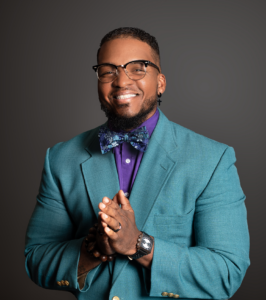
 In his biweekly column, Langley Shazor speaks to issues important to men within the territory.
In the last column, I talked about self-awareness and the importance of moving from the window to the mirror. I shared how reading “Emotional Intelligence 2.0” reminded me that accountability starts with seeing yourself clearly, not the version you project or the one you have convinced others to believe, but the version that shows up in your patterns. But the next step is where most of us stumble, not in recognizing what we do, but in deciding what to do with that truth once we see it. This is where self-management comes in.
Self-management is not just about staying calm or avoiding conflict. It is about controlling your emotions, behaviors, and impulses in the moment. It is the pause between what happens and how you respond. It is the space where decisions are made, relationships are either strengthened or weakened, and your growth either shows up or disappears. It is where maturity gets tested. That pause is not easy. It is one thing to reflect after the damage is done. It is another thing entirely to stop yourself in the moment, to shut your mouth when your pride is screaming, to walk away when your anger wants to stay, or to sit quietly in discomfort when your ego wants to be loud. That pause is not weakness; it is strength under control. It is dignity in action.
There was a time when I believed being emotionally expressive was a sign of authenticity. I told myself that saying exactly what I felt in the moment was proof that I was honest, passionate, and real. But what I had to learn, through trial and error, is that there is a fine line between being honest and being emotionally reckless. Not every emotion needs a microphone. Not every trigger needs a response. Not every feeling is an invitation to act. Self-management is not about bottling your feelings or pretending they are not real. It is about acknowledging them without letting them lead you. It is about having the maturity to say, “I feel this, but I choose how I respond to it.”
And the truth is, many of us are still learning how to pause. We are quick to speak and slow to listen. Quick to react and slow to reflect. We say things out of frustration that we do not mean. We shut down when we should speak up, or we lash out and then blame the other person for the reaction we triggered. How many times have you said something in anger and then wished you could take it back? How many relationships have you strained, not because of what happened, but because of how you handled it? How many moments have you replayed in your mind, wishing you had taken just a few more seconds before you opened your mouth or sent that message?
Self-management is not something you master once and move on from. It is a skill you sharpen through discipline and practice. It is a decision you make again, and again, especially when your old patterns want to come back. When I started reading “Emotional Intelligence 2.0,” I began paying closer attention to how often I justified behavior based on what I was feeling. I started seeing how easy it was to make excuses for snappy tones, for avoidance, for overreactions, especially when I was tired or under pressure. But pressure does not excuse disrespect. Stress does not justify a lack of self-control. In fact, pressure is often the very thing that reveals where you are in your emotional growth. When you cannot manage yourself, it is not just a communication issue—it is a character issue.
It is easy to look at your environment or the people around you and say, “This is why I reacted like that.” It is harder to admit, “I chose that reaction.” The world is going to test your patience, your boundaries, your capacity. People will frustrate you. Situations will stretch you. And if you are not anchored in emotional discipline, you will find yourself constantly apologizing, constantly repeating cycles, and constantly blaming others for outcomes you created. I have seen brilliant people damage their influence because they could not manage themselves when it mattered most. I have watched leaders fall apart, not because of failure, but because of unregulated emotion. I have seen relationships crumble because someone refused to pause.
That pause is everything. It is the difference between a moment that hurts and a moment that heals. It is the difference between reacting and responding. And I am learning to value it more. I am learning to pause not just when I am angry, but also when I am afraid, when I am disappointed, when I am tempted to withdraw or dismiss something that actually matters. Self-management is not just about controlling your behavior, it is about protecting your integrity and preserving your relationships. Sometimes that means saying, “Let me take a moment before I speak so I do not do harm.” Other times it means saying, “I am upset, but I am choosing to listen anyway.” And often, it means choosing not to act at all, simply because you know the emotion is louder than your wisdom in that moment.
Self-management is hard work. It requires constant self-checks. It means noticing when your breathing changes, when your tone shifts, when your jaw tightens or your energy changes. It means slowing down long enough to ask, “What is really happening here?” It means choosing intention over instinct. And over time, that pause builds something in you. It builds restraint. It builds wisdom. It builds trust, not just with others, but with yourself. You begin to trust your own ability to stay rooted, to move with purpose, and to choose responses that reflect who you are; not just how you feel.
That is where real accountability shows up. It is not just about saying “I messed up.” It is about choosing not to mess up again in the same way. It is about making a different decision the next time the same emotion hits. That is the pause that builds you. That is the space where growth lives. And that is the work I am committed to.
Langley “Casual-Word” Shazor is a poet, author, publisher, entrepreneur, public speaking coach, podcast host, and pastor who is an advocate for youth and men. His goal is to enlighten, empower, and liberate those who are silenced, marginalized, and enslaved to self-destructive thoughts and behaviors. Visit thecasualword.com.
Editor’s Note: Opinion articles do not represent the views of the Virgin Islands Source newsroom and are the sole expressed opinion of the writer. Submissions can be made to visource@gmail.com.
Related Link: