

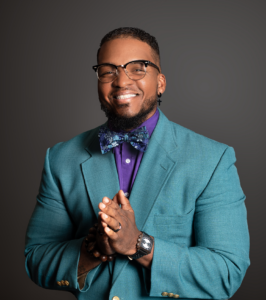
 In his biweekly column, Langley Shazor speaks to issues important to men within the territory.
Every man carries a story about his father. Some tell theirs with pride, others with pain, and many with silence. Whether our fathers were present, absent, loving, complicated, or broken, their imprint remains. It shows up in how we love, how we lead, how we express anger, and even how we measure our own worth. For better or worse, our fathers are our first blueprint for manhood. When that blueprint is incomplete or damaged, it leaves what many call the father wound, an invisible ache that quietly shapes a man’s entire life until he learns to face it.
The father wound is not just about absence. It is about emotional distance, lack of affirmation, and moments where presence did not translate into connection. Many men grew up with fathers who worked hard but spoke little. They provided everything but never said, “I am proud of you.” They taught responsibility but never modeled vulnerability. Those fathers were not evil; they were often just unhealed themselves. They learned manhood through duty, not depth. They believed their sacrifices would speak louder than their silence, but their sons needed words as much as they needed provision.
For those who grew up without fathers at all, the wound can take a different shape. Absence becomes identity. The missing presence becomes a mirror of inadequacy. A boy left to figure out manhood on his own often creates a version of himself built on survival. He learns independence early, but it comes with isolation. He becomes a man who trusts no one, asks for nothing, and hides his insecurities behind productivity. He becomes everything he thought a man should be, but rarely everything he truly is.
The tragedy of the father wound is not just the pain it causes, but how easily it passes on. Unhealed men become cautious fathers. They build walls instead of bridges, convinced that protection means emotional distance. They become reliable but unreachable. They show up physically but remain absent emotionally. The cycle continues until someone decides to confront it, not with blame, but with courage.
Healing the father wound begins with honesty. It starts when a man stops pretending that his upbringing did not affect him. Too often, we downplay our pain out of loyalty. We say, “My father did his best,” which might be true, but it does not mean his best did not leave scars. Acknowledging pain is not dishonoring your father; it is freeing yourself from the parts of his story that do not belong to yours. It is recognizing that gratitude and grief can coexist, that you can thank your father for his effort and still mourn what he could not give.
Forgiveness is the next step, and it is often the hardest. Forgiveness does not mean excusing what happened or pretending it did not hurt. It means deciding that the pain will not define who you become. Some men will never get the apology they deserve, but they can still choose peace. Forgiveness releases the grip of resentment and makes space for growth. It allows a man to look at his father not as a giant shadow, but as a human being, flawed, shaped by his own history, doing the best he knew how. When we see our fathers as men instead of myths, compassion begins to take root.
For others, healing might require reconciliation, not always through conversation, but through understanding. Some men need to sit with the memories they avoided. Others may need to write the words they never said or pray the prayers they never voiced. Healing does not always involve the father himself. Sometimes it is simply about confronting the version of him that lives inside you, the inner voice that says you are not enough, that you must always perform, that love must be earned. When you silence that voice, you make room for your own.
Spiritual and emotional healing go hand in hand here. Many men find peace by recognizing that they are not bound to repeat what they experienced. Faith teaches that God fills the gaps left by human failure. Understanding that truth allows a man to stop chasing what his father could not give and start receiving what life still offers: grace, guidance, and community. The father wound begins to close when a man stops seeing himself as what was missing and starts seeing himself as what remains possible.
Healing also means reimagining how we father the next generation. The man who has faced his pain becomes a different kind of father. He listens more, apologizes when needed, and leads with patience instead of pressure. He teaches his children that love is not earned through performance. He becomes the kind of father he once needed, and in doing so, he redeems the story. Every healed man becomes a bridge that keeps the next generation from falling into the same silence.
This work is not easy. It requires time, reflection, and sometimes professional help. But the reward is freedom, the kind that breaks cycles and restores peace. When a man heals his father wound, he begins to experience manhood without the filter of pain. He learns to give affection without fear, to receive love without suspicion, and to lead without needing to control. He discovers that strength is not in what he hides but in what he heals.
To heal the father wound is to rewrite your definition of manhood. It is to realize that love and strength were never opposites. It is to accept that your father’s limitations do not have to be your legacy. The moment you decide to confront your pain instead of carrying it is the moment you begin to break the cycle.
You cannot change the story you were born into, but you can choose the one you build from it. That choice, quiet, intentional, and courageous, is how manhood evolves. Healing does not erase the past. It redeems it.
Editor’s Note: Opinion articles do not represent the views of the Virgin Islands Source newsroom and are the sole expressed opinion of the writer. Submissions can be made to visource@gmail.com.
Related Link:
Op-Ed: The Lounge | A Column for Men: Breaking the Cycle: From Myths to Manhood