

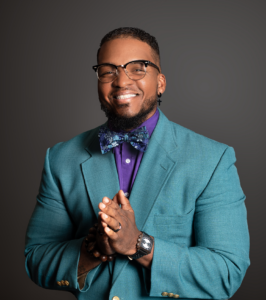
 In his biweekly column, Langley Shazor speaks to issues important to men within the territory.
This is another writing inspired by one of my 40-word videos. The word at the time of this writing is resilience. An overutilized and often oversimplified general term, it has become one of many major buzzwords across social media by both professional counselors, life coaches, and therapists, as well as the self-declared experts and quasi-coaches who have infiltrated and polluted the mental health space. Although being and having resilience are high-quality character traits, they should not be the justification for continued abuse.
To contextualize this, I think back on something that I had to debunk in conversations and posted on social media about: thick skin is not license for toleration. In a culture that is inherently abrasive under the guise of being direct, and rude behind the façade of communicative, the call for thick skin is an excuse to absolve perpetrators of accountability. We don’t have to just deal with people, especially disrespectful ones. Strategist and former hostage negotiator, Ryan Dunlap (whom I follow closely) said, “you can’t burn bridges and expect people to show up with a boat”.
Thus, thick skin and resilience are somewhat synonymous and are both being projected on us to force acceptance of adverse situations and interactions. This is not something we should be built for. A continual onslaught of circumstances and occurrences that keep our nervous systems firing at a high level, keeping us in a heightened emotional state, and maintaining the activation of our fight or flight mechanism is not at all what we were designed to do or how we were purposed to live.
Let us also not swing the pendulum to the extreme opposite end either, which is something we are also experiencing in a society where people are so ill-equipped for the complications of life that they categorize everything as toxic and traumatic. This broad-brush approach allows them to cower behind terminology and forgo accountability to make tough and necessary lifestyle changes. Running, hiding, dismissing, neglecting, or suppressing are not solutions but strategic aversion tactics.
The complication is striking the balance between being assertive (not combative) in establishing boundaries, being resilient when things happen that we cannot control, and removing ourselves from things that do not require our energy. Wisdom, like the Serenity Prayer, states, is knowing the difference. I would say that knowledge is knowing the difference and wisdom is making the appropriate choice and the correct time.
Resiliency, though a badge of honor, should not be armor. We cannot shut ourselves off from experiencing life, nor can we constantly be at war with it. Some of what we experience, we have the capability to alter. We have talked extensively about spheres of influence, rooms, tables, environments, and habits. If you find yourself constantly on guard, it is time to analyze several areas to see what is keeping you in a constant state of heightened emotions. It is one thing to have your “spidey senses” tingling and quite another to live in paranoia.
Being resilient means being able to recover from one-offs. To expound on that further, these individual situations should be different in nature, magnitude, and complexity. If you are fighting the same battles, in the same areas, with the same people (or types of people), you are unfortunately the common denominator. The silver lining in that realization, and a more appropriate way to be resilient, is that you can change all of that. It will take some time, and it will be difficult, but it can be done. And if you are exhausted and burning or burnt out, it should be done for your well-being.
Another justification for not being built for everything is that everything is not yours to take on. Not every issue is your battle, not every need yours to address, not every injustice your crusade to undertake. With 8+ billion people on this planet, it is quite ok to let someone else do some things. Now this does not mean if you are able to help that you hope someone else does (again a one off). We are simply pointing out that you can’t spread yourself so thin that you lose your ability to be resilient as well as effective in your calling. Adding to this topic, you also don’t have to take on others’ problems to fix or solve. By all means, be a sounding board, safe space, voice of reason, etc. but whatever their issue is, is not your responsibility. Understanding the difference allows you to have that armor of resilience primed for actual “combat” of the unavoidable nature. Being your brothers’ or sisters’ keeper means you empower them to win their wars, not enable them to pass the battle off to you.
We are more than conquerors, which means we are more than capable of coming back from anything. We just don’t need to be coming back from everything. Resilience is applied; it isn’t assimilated. We use it to overcome, we do not become it, and it does not become a lifestyle. Some things are not our battles, while others require us to be bold and confront opposition head-on. Wisdom is knowing when to walk away and when to push through. Be resilient, but don’t live there.
Langley “Casual-Word” Shazor is a poet, author, publisher, entrepreneur, public speaking coach, podcast host, and pastor who is an advocate for youth and men. His goal is to enlighten, empower, and liberate those who are silenced, marginalized, and enslaved to self-destructive thoughts and behaviors. Visit thecasualword.com.
Editor’s Note: Opinion articles do not represent the views of the Virgin Islands Source newsroom and are the sole expressed opinion of the writer. Submissions can be made to visource@gmail.com.