

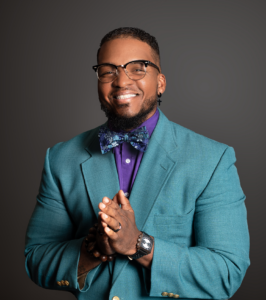
 In his biweekly column, Langley Shazor speaks to issues important to men within the territory.
One of my personal goals and public crusades is to become part of a collective of men who have taken up the mantle of impactful fatherhood. I will be the first to admit that I did not always make the best choices as a father and role model; I was sometimes absent, disengaged, uninterested, and subpar overall. I speak on this in my book “Baby Daddy: Changing the Narrative.” This book was just as much an introspective journey into my own deficiencies as it was a vulnerable dive into many of the things men do and don’t do. I will plug myself here, if you have not picked up a copy of this book, I recommend it (available on Amazon).
Parenthood is a challenging but worthwhile privilege. I must stress that point because there are many people and couples who want to have a child and cannot. Of course, we understand that there are adoption and fostering opportunities which are equally impactful for young people deprived of love and support. However, there is something special about birthing and raising your own children that can’t be completely quantified or understood. With this in mind, I reemphasize the opportunity to bring a life into this world and raise it.
As men, we often want to have a son to carry on our lineage. We can be rough and tough with them and do all the cool “boy” stuff. It is often said that it takes a man to raise a man. However, it depends on the kind of man you are that will determine how that youngster will develop. This, of course, means you must first be involved. This is a privilege and a responsibility. We should retrain our minds from “I have to raise this child” to “I get to raise this child.” You have a chance to create and effect change through your lineage, as well as your legacy.
Today, I want to highlight the importance of our role in the lives of our daughters. I was having a conversation recently with a young lady who talked about the behavior that was first modeled, then emulated. She spoke about her mother accepting abuse, neglect, and infidelity. Witnessing these regular occurrences framed what she would believe to be a relationship should be. She excused the same types of behaviors in her own dating life due to that foundation. All she knew was men having other families and children outside of the relationship and the neglect because attention was elsewhere. In extreme cases, we see unwanted advances by older men (typically in the home) on younger women.
This is not the forum to dissect those issues from a psychological viewpoint. Suffice it to say that many women grow up with a skewed sense of love and relationships can be directly tied to the type of men they had been exposed to. Bringing us to a question that is often asked, but seldom contemplated on deeply; would you want your daughter to date a man like you? Do you represent the type of person you would want her to build a life with? Do you teach her to respect herself and to have boundaries?
A daughter’s first love is her father, or that male role model that has stepped in to provide stability. What she sees and how she begins to process the dynamics between men and women stem from her observations as well as interactions. Like the young lady I mentioned earlier, what you normalize is what will ultimately be her reality, at least until she liberates herself from those types of attachments. You play the most pivotal role in who she will become and how she will discover her place in the world. You have a duty to be a good example.
WE should be ashamed of ourselves. We often talk about the behaviors and predispositions of some women, who are direct reflections of either poor fathers or absentee fathers. We mock the term “daddy issues” as if we aren’t responsible (as a gender) for the issues existing in the first place. We berate women for being products of environments we created. Pot calling the kettle black, don’t you think? Of course, this doesn’t apply to every person and does not excuse irreverent behavior on either side of the fence. We do need to take some accountability, though.
But there is always hope. Many of us, me included, started out being the absolute worst version of not only ourselves, but of men. I, like many in my circle and those I have worked with and been connected to, took a stance to become something better and to impart that with our children. My daughter and I, through time, hard work, tough conversations, and overcoming outside struggles, have built a blossoming, healthy relationship. We talk daily about everything from boyfriends (talk about uncomfortable) to future plans, travel, and fashion. She is comfortable talking to me about anything, and I had to create that space for her.
The journey of fatherhood is one of continuous growth and self-improvement. It’s about recognizing our past mistakes, learning from them, and striving to be the best role models we can be for our children. We must cherish the opportunity to influence our daughters’ lives positively, teaching them self-respect and healthy relationship dynamics. Let us be the fathers who break the cycle of neglect and disengagement, replacing it with love, attention, and unwavering support. By doing so, we not only transform our daughters’ futures but also create a legacy of strong, compassionate, and responsible men who understand the profound impact of their role in their children’s lives.
Langley “Casual-Word” Shazor is a poet, author, publisher, entrepreneur, public speaking coach, podcast host, and pastor who is an advocate for youth and men. His goal is to enlighten, empower, and liberate those who are silenced, marginalized, and enslaved to self-destructive thoughts and behaviors.
Visit thecasualword.com.
Editor’s Note: Opinion articles do not represent the views of the Virgin Islands Source newsroom and are the sole expressed opinion of the writer. Submissions can be made to visource@gmail.com.