

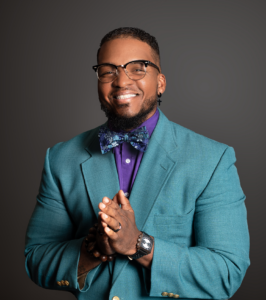
 In his biweekly column, Langley Shazor speaks to issues important to men within the territory.
For far too long, dominance has been mistaken for manhood. The louder voice, the firmer grip, the unyielding command, these were seen as signs of leadership, strength, and control. Men were taught that to lead meant to be obeyed, that to be respected meant to be feared, and that the measure of manhood was how much authority one could exercise over others. This idea has lived so long and so loudly that it has shaped not only how men see themselves, but how the world expects them to behave.
The myth of dominance was born out of survival. In older times, men were taught to conquer because their environments demanded it. Protection required power, and authority was often the only shield between chaos and safety. But as societies evolved, the world changed faster than the myth did. What once helped men survive began to make them hard to live with. Many men still walk around believing that control equals stability, that silence equals order, and that emotional distance equals respect. But that is not leadership; it is fear wearing confidence as camouflage.
Dominance is seductive because it gives the illusion of strength. It looks decisive, commanding, and sure. But the truth is that dominance often grows out of insecurity, not authority. Men who feel unseen often compensate by trying to be unchallenged. When a man has not learned how to manage himself, he tries to manage everyone else. He confuses obedience with loyalty and submission with respect. True leadership, however, does not require force. It earns trust through consistency, vision, and compassion.
We have to be honest about how this myth has damaged relationships. Too many homes have fallen apart under the weight of men trying to rule instead of relate. Too many fathers have confused discipline with distance. Too many husbands have mistaken control for care. The belief that manhood requires dominance teaches men to lead from ego rather than empathy. It drives a wedge between love and leadership until the people who once looked up to them begin to look away from them.
When a man’s sense of power depends on how much control he can exert, he is not strong; he is fragile. Real power is quiet. It does not need to announce itself or demand recognition. It shows up in stability, not superiority. The most powerful men are not those who control rooms but those who calm them. They are not the ones who make everyone afraid to speak, but the ones who make everyone feel heard. Dominance seeks to be right; leadership seeks to be effective. One feeds the ego; the other builds the environment.
If we want to raise stronger men, we must start teaching them that leadership is not about hierarchy; it is about harmony. A man who understands himself leads with balance. He knows that firmness without fairness is cruelty, and authority without empathy is tyranny. He understands that being the head of a home or an organization does not mean ruling from above; it means serving from within. True leadership is not about being in charge of people; it is about being responsible for them.
The myth of dominance also distorts brotherhood. Too many men approach relationships with other men as competition instead of community. We measure worth through comparisons — who earns more, who lifts more, who commands more attention. We confuse hierarchy with respect, and we isolate ourselves behind pride. The result is that even among friends, there is often quiet tension, unspoken rivalry, and distance. The strongest men are not the ones who stand tallest; they are the ones who stand together.
Part of breaking this myth is redefining what power looks like. Power is not about how many people move when you speak. It is about how many lives are better because you led. A man who uses his influence to uplift others, to mentor, to restore, and to protect peace is far more powerful than one who relies on fear to keep people close. Power without principle is just intimidation dressed up as leadership. But power guided by humility becomes legacy.
It takes maturity to understand that dominance is not mastery. A man who dominates others often lacks mastery of himself. Self-control, patience, and the ability to listen are the highest forms of power. They are what separate leaders from manipulators. When a man learns to listen before reacting, to pause before judging, and to choose peace over pride, he begins to step into true authority. The kind that transforms not only his environment but also his own heart.
We also have to acknowledge how culture has reinforced this myth. Movies, music, and even religion have often glorified dominance as a masculine virtue. The strong, silent man who commands fear has been romanticized for decades. But behind that image, there is often loneliness. Many men who live this way die misunderstood, remembered for their achievements but not their hearts. The tragedy of dominance is that it wins battles but loses relationships.
It is time to redefine strength. Real strength is not how loud a man can be, but how steady he can remain. It is not proven by who he can control, but by what he can endure without losing himself. Strength is knowing when to lead and when to listen, when to speak and when to stay still. It is the quiet discipline of a man who knows his power but chooses peace. That is manhood, not dominance, not intimidation, but control over one’s self and compassion for others.
When men begin to lead from within instead of ruling from above, everything changes. Homes become safer. Teams become stronger. Communities become healthier. The world begins to experience manhood as it was meant to be: protective, present, and purposeful, not oppressive or performative.
Dominance might demand respect, but it rarely earns it. Leadership, grounded in humility and guided by wisdom, does both. A man who leads through love will outlast the one who leads through fear every time.
Manhood is not earned through dominance. It is earned through discipline, integrity, and the courage to grow. When a man discovers that leading with empathy makes him more effective than leading with control, he becomes something better than dominant; he becomes free.
Editor’s Note: Opinion articles do not represent the views of the Virgin Islands Source newsroom and are the sole expressed opinion of the writer. Submissions can be made to visource@gmail.com.