

While the Virgin Islands passes new laws several times a year addressing the ever-evolving needs of the territory, a few old laws, some enacted a century or more ago, are long forgotten, widely ignored, or possibly getting in the way, officials said Monday.
The Senate’s Rules and Judiciary Committee held the first of two planned symposiums Monday, where elected officials and legal experts discussed ways the V.I. Code could or should be updated.
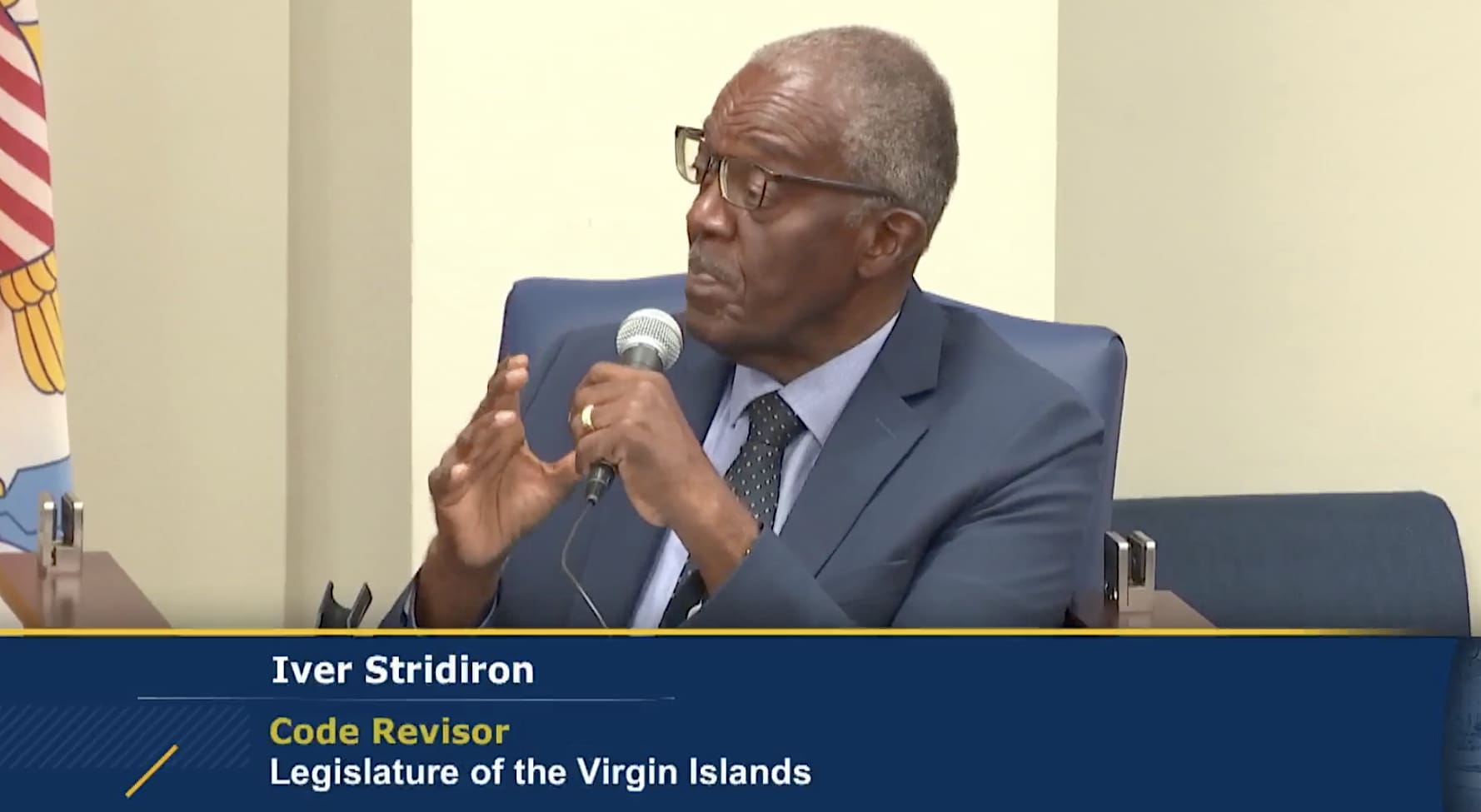
Committee Chair Sen. Diane Capehart said former Attorney General Iver Stridiron, currently the Legislature’s code revisor, had suggested 82 laws for potential revision, some dating back to 1921. There were many more to come. Stridiron said more than 1,000 amendments were urgently needed to bring the code up to date.
The V.I. Code had not had a comprehensive update since 1921 he said, and a complete overhaul had not been undertaken since 1958 or 1959. Such revisions and updates should ideally take place every decade, he said.
Regina deChabert Petersen, administrator of courts at the Judiciary of the Virgin Islands, said her office was eager to advise and support changes to update laws.
Sen. Kenneth E. Gittens pointed out several sections of law that were both outdated and entirely ignored in modern times, such as a provision requiring the fire department to report to the police department. Sen. Marise C. James expressed concerns that repealing sections of law could have unintended consequences, especially if the actual practice of how government business had been done no longer followed the letter of the law.
“I’m not going to repeal something unless I know it’s adequately covered or no longer necessary in the law,” James said.
The Licensing and Consumer Affairs Department’s General Counsel Geraldine Vaval said several laws needed to be changed to clarify their intent, application, and better empower regulators.
“We are proposing amendments to allow the DLCA to adjust licensing fees annually and impose stricter administrative fines for violations, including the authority to issue both civil and criminal citations for the same offense. These changes will ensure more robust enforcement and compliance,” Vaval said.
Among other proposed changes, the department wanted to expand its authority to issue civil citations and enforce penalties, making USVI enforcement powers closer to those on the mainland, she said.
St. Croix attorney Russell Pate suggested setting a statute of limitations for employment lawsuits, like wrongful firings. Pate, who often represents people allegedly hurt on the job, asked why someone killed or injured on the job would be given less time — two years — to sue than someone wrongfully terminated, who has six years.
“Businesses should not have to hold their breath for six years for a lawsuit on a labor or employment issue. Those fired, terminated or treated unfairly do not need six years to contemplate to sue, while a person who lost their arm, leg, or eye would only have two years,” he said. “I am not a corporate or business lawyer. I represent people who are generally injured by corporate negligence. All laws should be fair and balanced. Just as providing a person in a car accident six years to sue would be too long, six years for wrongful discharge is too long — and is a burden upon businesses from large to small. This is an easy fix, which promotes balance and fairness.”
The change would not necessarily speed up resolutions, Pate said, because Virgin Islands courts lag so far behind. Pate said one wrongful discharge case in St. Thomas has lingered for 22 years.
A second symposium was scheduled for Aug. 26 in the Earle B. Ottley Legislative Hall on St. Thomas at 9:30 a.m.
Sens. Diane T. Capehart, Milton E. Potter, Marise C. James, Kenneth E. Gittens, and Franklin D. Johnson attended Monday’s meeting.